The Illusion of Engagement

In today’s enrichment landscape, storytelling chess has become the darling of parent-friendly branding. Quirky characters, whimsical narratives, and gamified lessons promise emotional development and cognitive growth. It’s marketed as “fun,” “safe,” and “engaging”—especially for young children.
But beneath the surface, we must ask: Are we teaching chess—or selling a puppet show?
Storytelling chess may feel comforting, but comfort isn’t the same as growth. Real development—emotional, cognitive, and strategic—requires challenge, structure, and truth. Not every child needs a fairy tale. Many are ready for the real thing.
The Gimmickry Trap

Storytelling chess thrives because it’s designed to appeal to parental anxiety and social optics. It promises engagement without discomfort, learning without rigor, and development without discipline. But here’s what often gets lost:
-
- Oversimplification of Strategy: Turning chess pieces into characters with personalities can obscure their tactical roles. A knight isn’t “Sir Jumper”—it’s a fork engine. A pawn isn’t a “brave soldier”—it’s a positional tool. When we dilute the game, we delay mastery.
-
- Dependency on Narrative: Children may struggle to transition from story-based learning to abstract thinking. When the characters disappear, so does their understanding.
-
- Emotional Theater Over Emotional Grit: Storytelling chess claims to build emotional intelligence—but often avoids the very experiences that cultivate it: loss, resilience, reflection, and competition.
-
- Marketing Over Pedagogy: Many storytelling programs are built for optics, not outcomes. They look impressive on Instagram, but rarely produce tournament-ready players or strategic thinkers.
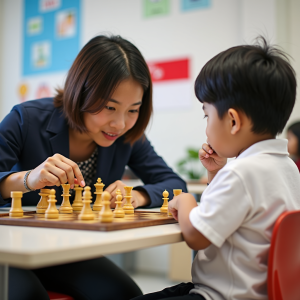 At Intchess Asia, we believe children are capable of far more. We’ve seen it firsthand.
-
- Facing Loss with Grace: Our students learn to shake hands after defeat, analyze their mistakes, and come back stronger. That’s emotional maturity.
-
- Learning Through Structure: From notation to tactics, we teach chess as a language of logic and discipline. Even our youngest players learn to record moves, recognize patterns, and think ahead.
-
- Building Resilience Through Competition: Real growth happens on the field—through tournaments, time pressure, and tough decisions. We don’t shield children from challenge. We guide them through it.
- Emotional Intelligence Through Mentorship: Our coaches don’t tell stories. They build relationships. They teach children how to regulate emotions, communicate respectfully, and reflect with honesty.
Our Philosophy at Intchess Asia